
AI's bottleneck has stopped being the model
Between 30 and 50 percent of US data centers planned for 2026 are now delayed or cancelled. The constraint is no longer silicon. It is the power grid, the water table, and the people who live next to the sites.
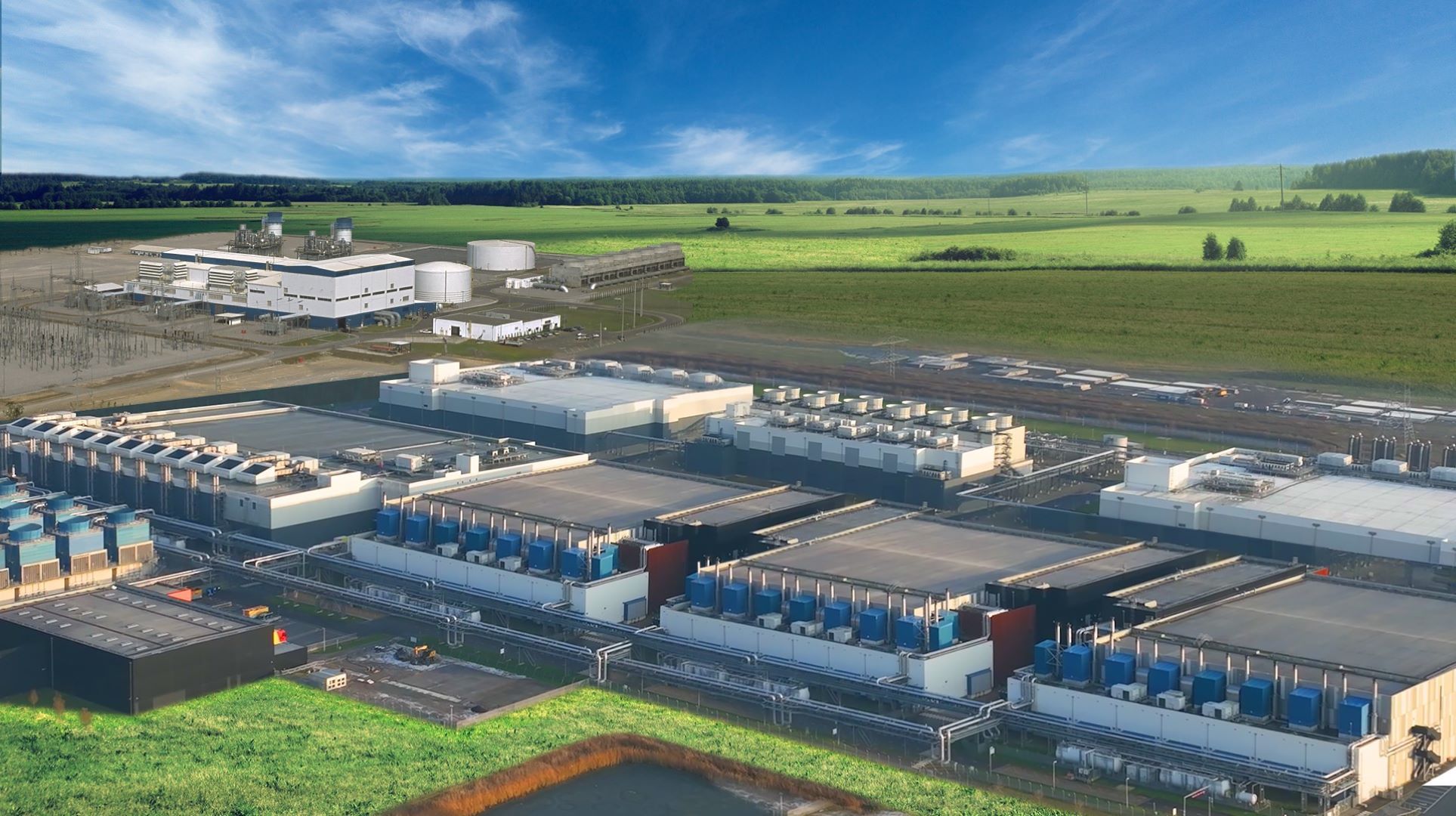
Between 30 and 50 percent of US data centers planned to come online in 2026 will not come online in 2026. Of the 12 gigawatts of capacity announced for this year, roughly 7 gigawatts is delayed or cancelled. In the first quarter of 2026, Tom's Hardware reported that 75 data center build-outs worth $130 billion had been blocked by community opposition before construction began. Maine passed a statewide moratorium on large data center construction earlier this year, the first such statewide bill our sources track. At least twelve other states have moratoriums under active consideration.
The story behind these numbers is not narrowly technical. AI capex through 2024 and 2025 was underwritten on the assumption that grid and water infrastructure would scale with the compute. Two years in, they are not. The proximate cause is transformers and substations. The deeper cause is that the grid buildout the capex assumed never happened.
The substation bottleneck
The electrical problem is the easiest to quantify. A modern AI training cluster draws hundreds of megawatts. A reasonably large data center campus draws gigawatts. The US power grid was not built for this kind of load growth on this kind of timeline.
The most visible symptom is transformer lead times. On industry lead-time tracking, ordering a high-voltage transformer for a new substation took 24 to 30 months before 2020. The lead time today is closer to five years. Substations cannot be commissioned without them. Data centers cannot run without substations. A five-year transformer lead time means that any data center planned in 2026 that does not already have its substation equipment under order will not actually open in 2026, regardless of what the press release said when it was announced.
Beyond the equipment, the grid itself is undersized. New interconnect queues at major utilities are years deep, with applications that filed in 2022 still working through review in 2026. Some operators are responding by building their own generation on-site. That sometimes means natural gas turbines, which arrive in 18 to 36 months. It sometimes means small modular reactors, which arrive on a timeline closer to "the second half of this decade if everything goes well." Neither approach was on the critical path of the AI capex announcements made in 2023.
The water and the neighbors
The water story is less famous than the power story but politically more active. AI clusters generate enormous heat. Most cooling architectures use water. A single large data center can consume the equivalent of a small town's water supply per day, and a meaningful fraction of that water leaves the system through evaporation rather than returning to the treatment plant.
In drought-affected states this is an immediate political issue. Google and Microsoft have both re-committed this year to water-positive operations by 2030. The pledges are real. The timelines are long. The water tables of the counties hosting the next wave of facilities are not on a 2030 timetable.
The political math has shifted faster than the engineering math. Five years ago, a data center proposal would be welcomed by local officials as a tax-base win and a job-creation story. In 2026, that welcome is no longer reliable. Counties in Virginia, Ohio, and Louisiana have moved from receptive to wary inside a single political cycle, on the moratorium tracking that MultiState publishes. County officials who backed the first wave of facilities have, in several cases, lost re-election after their constituents' utility bills went up. The political effect is bipartisan. Conservative and progressive county officials both end up saying no, because the underlying voter concern (utility rates) is bipartisan.
Louisiana, Michigan, New York, Ohio, and Virginia all have moratorium bills under active consideration. Model legislation moves between states fast in 2026 because the underlying experience is similar in each state.
What this does to the AI roadmap
The publicly stated capex plans of every major foundation-model company assume access to the next tranche of compute on something like the schedule that GPU vendors are quoting. Those vendors are quoting capacity that requires data center power that does not exist on the schedule the vendors assume.
Sell-side coverage of the hyperscalers has not, to our reading, adjusted target multiples for a one-to-three-year slip in data center capacity. Most of the infrastructure will land eventually, on a delayed schedule; some of it, on the Maine and Virginia evidence, may not land at all in its currently proposed locations. The schedule has slipped by something between one and three years for most of the planned capacity, and the slippage is structural rather than cyclical. A bigger order book does not move the transformer lead time. A larger water permit application does not change the underlying water table.
The practical consequence is that on the transformer and interconnect timelines above, the compute the major labs actually take delivery of in 2026 and 2027 is likely to be materially below the capacity implied by their public order books. The labs that have already secured substation capacity and interconnect rights are likely to widen their lead, on this reading, over labs still queued at utilities. The next tranche of capacity is most likely to land in Texas, Arizona, and the interior Mountain West, and, on public announcements from Humain and G42, increasingly in Saudi Arabia and the UAE, where the underlying political math is structurally different.
The bottleneck is no longer something Congress can write a bill about. It is the local zoning board. The state utility commission. The neighbor with a lawn sign. The growth of AI capability for the next several years will be regulated less by the AI bills currently before the Senate Commerce Committee and more by the same political forces that regulate the construction of a Walmart distribution centre.
The next round of AI capability will be won at substations as much as in the model code. The substations are subject to politics that the AI companies were not historically built to win, and the AI companies are only now starting to staff the kind of local-government and utility-commission expertise that would let them play that game seriously.
Whichever lab wires up its next gigawatt first will get to ship the next model. Everyone else waits for a transformer.
Sources
6 cited- 01
- 02 U.S. AI Data Center Delays: 7 GW Capacity Crisis [2026]
Tech Insider · Report
- 03 AI Data Centers: Big Tech's Impact on Electric Bills, Water, and More
Consumer Reports · Article
- 04 AI Data Center Delays 2026: Power Grid Crisis Guide
The AI Consulting Network · Article
- 05 Data centers for AI use huge amounts of electricity, water, driving up costs and climate concerns
CBS News Chicago · Article
- 06 State Data Center Laws vs. Federal AI Push: 2026 Tracker
MultiState · Apr 14, 2026 · Report
You might also like
-
 Tech
TechCommerce disabled a frontier model for nineteen days, then let it back on
Anthropic released Fable 5 on June 9. Commerce ordered it disabled on June 12. It returns July 1 under a new agreement. The mechanism the government used has no regulatory framework.
-
 Tech
TechSpaceX bought Cursor. The coding stack has a new owner.
A $60 billion all-stock deal puts half the professional developer market under one man's empire. The structural question is what teams should do when a tool they depend on becomes political.
-
 Tech
TechEvery IDE is a chat interface now. The editor is the side panel.
Cursor, Windsurf, Zed, and GitHub Copilot have, in four years, inverted the layout of professional software development. The text buffer used to be the centre. It isn't anymore.
-
 Tech
TechPasskeys mostly work. Almost nobody uses them.
Six years after FIDO2, three years after the major platforms shipped polished passkey UX, the adoption curve still hasn't bent. Here is what's blocking it and what would change it.