
Severance made the office the antagonist, and the trick is still working
Most prestige TV uses horror as a structural device. Severance uses workplace bureaucracy as the actual antagonist. Two seasons in, the trick is still working.
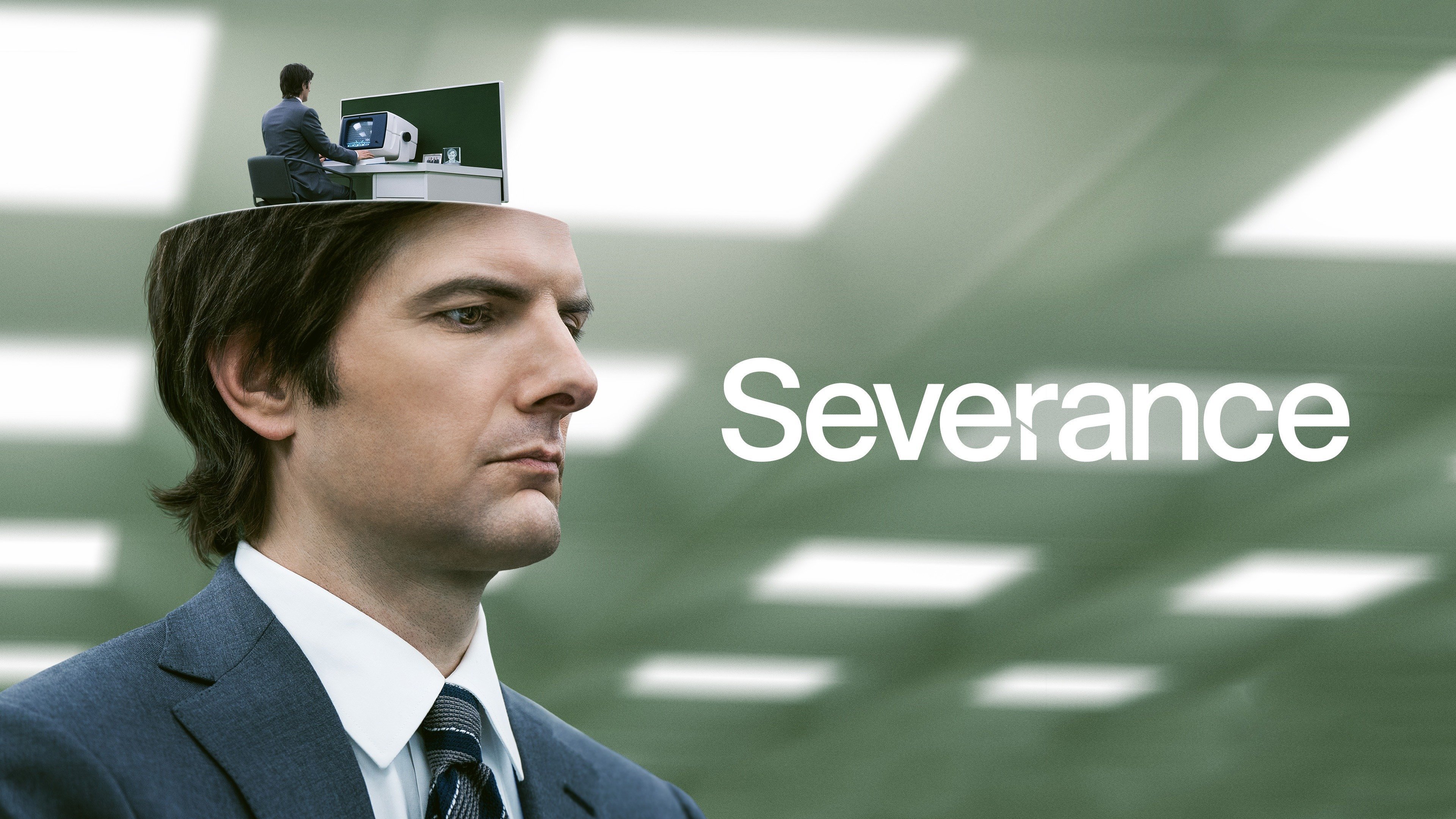
The genre Severance belongs to does not have a settled name. It is not horror, although it scares people. It is not science fiction, although it is set in a near future that is recognisably ours. It is not workplace drama, although nearly every scene takes place in an office. It is, more than anything else, a show about what happens to a person when a job is allowed to colonise their interior life.
The conceit is straightforward. Lumon Industries has invented a brain procedure that splits an employee into two selves. The "innie" works the job and remembers nothing else. The "outie" lives the rest of life and remembers nothing about work. The two never meet. When the workday ends, the innie experiences the elevator opening and finds themselves back at their desk. There is no relief from the office because there is no time outside it. The work is the whole of their existence.
Lumon presents this as a perk. Stress, the company says, leaves work at work. Employees return home unburdened. The PR videos selling severance look like every internal HR film a real corporation has shot in the last twenty years, with the same flat optimism and the same dead-eyed actors. The horror is not the procedure. The horror is that the show takes the corporate framing seriously, accepts the language at face value, and watches the language produce its consequences.
A total institution, not a work-life-balance problem
The temptation, watching Severance, is to read it as a metaphor for work-life balance. Work-life balance is a problem you can solve with calendar discipline. Severance is about something you cannot solve with discipline: the way a sufficiently total institution rewrites the consciousness of the person inside it, and how that rewriting becomes invisible to everyone who is not the rewritten person.
The innies have no memory of life outside Lumon. They have no leverage. They cannot quit, because quitting requires having somewhere to go, and they have nowhere. They cannot organise, because organising requires solidarity built over years, and they have only the hours since their last shift. The outies have nominal control but no information. They consented to the procedure. They get a paycheck. They never see what their other self does. They are sleeping through a third of their life.
The architecture of Lumon does the rest. White corridors. Fluorescent lighting. Doors that do not open. Departments separated from each other for reasons that are never explained. Managers who quote a corporate scripture. The office is a Kafka novel with better art direction.
How season 2 didn't break
This is where most mystery-box shows die. By the end of season one, Severance had set up a substantial number of unanswered questions. What does Lumon actually do? Why is the work the innies perform so strange? What happened to the previous wave of employees? What is the founder's plan? A normal mystery-box show, faced with twenty open threads, picks the easiest three to answer, defers the others, introduces five new ones, and lets the audience drift away.
Severance answered the harder questions first. Season two confirmed that the macrodata refinement work is not random. It confirmed what happened to Ms Casey. It put a face on Lumon's leadership. The mystery did not contract into another mystery. It opened into a wider one, but a wider one with the previous mystery resolved.
This is rare because it costs the writers narrative real estate they could have spent on more setup. The compensation is trust. The audience, having been given answers when they asked for them, will follow the show further when it asks for more patience.
The thing it understands that most prestige TV does not
A workplace is a place of small humiliations. Severance is the rare show that takes those humiliations seriously as drama. A status meeting is treated with the same weight a film would give a confrontation. A music-themed dance break is treated with the same weight a film would give a dinner-table argument. The show insists that what happens at work is not less real than what happens at home. For people who spend a third of their lives at a job, the insistence is its own form of validation.
It also understands that work humiliation does not feel like horror in the moment. It feels like Tuesday. The office is scary in Severance not because the show stages it as scary but because the show declines to stage it as anything else. The fluorescent light is a fluorescent light. The carpet is a carpet. The horror is in the realisation that the camera is treating this as the most important thing in the characters' lives because, in fact, it is.
The show is rarer than its reputation suggests. Only a handful of series in the last decade have committed this completely to a single institutional argument while remaining narratively legible. The Wire is the one we would put in the same paragraph. The comparison is in the method, not the subject matter.
The pacing in the middle of season two stalls in the way Apple TV's mystery-driven shows tend to. Some performances coast on the conceit rather than complicating it. The mythology has expanded fast enough that a third season will have to make hard choices about what to leave unexplained. But the load-bearing argument has held. Two seasons in, the office is still the antagonist. Most shows would have replaced it with a person by now.
Sources
3 cited- 01 'Severance' creator Dan Erickson on writing Season 2
Jennifer Maas · Variety · Mar 12, 2025 · Interview
- 02 Severance — official series page
Apple TV+ · Article
- 03 How 'Severance' season 2 stuck the landing where most mystery-box shows fail
Kathryn VanArendonk · Vulture · Mar 21, 2025 · Article
You might also like
-
 Culture
Toy Story 5 passed $879 million. Two Pixar originals barely returned their budgets. That is the ledger.
Elio finished at $154 million on a reported $150 million production budget. Hoppers reached $389 million on the same. Toy Story 5 opened to a franchise-record $312 million.
-
 Culture
Brand New Day's trailer crossed a billion views in four days. That is a signal worth reading.
Brand New Day's first trailer set a record for the format in March 2026. Read against Thunderbolts and Fantastic Four's 2025 numbers, it points at a specific thing that still works.
-
 Culture
Rick and Morty marketed Season 9 as 'No AI slop.' That is a position.
The Season 9 tagline names AI-generated animation as the thing the show is not. That is rarer than it looks in 2026, and the implications are interesting whether you read it as principle or as positioning.
-
 Culture
The Backrooms grew up on YouTube. Hollywood is still adapting.
A teenager filming in his bedroom built one of the most influential new horror properties of the last decade. The studios noticed late. They are still figuring out what to do with what he made.